Choosing Between Portable and Stationary Compressors for Your Worksite
Understanding the Two Main Compressor Setups
When you need compressed air for your operation, the first major decision is whether to go with a portable unit or a stationary installation. Both have their place, and the right choice depends on how and where you work. Portable air compressors offer flexibility and ease of movement, while stationary compressors provide higher capacity and continuous duty for fixed locations. This article compares the two approaches to help you decide which setup fits your workflow.
Compressed air powers a wide range of equipment, from impact wrenches and nail guns to spray painters and sandblasters. The core difference between portable and stationary systems comes down to trade-offs in mobility, air output, and operating pressure. A portable compressor is built to be moved from job to job, often with wheels or a handle. A stationary compressor is bolted in place and connected to a piped air distribution system. Each design suits different patterns of air demand.
Portable Compressors: Built for Mobility
Portable air compressors are the obvious choice for contractors, service technicians, and anyone who needs compressed air in multiple locations. These units are compact, relatively light, and often feature a receiver tank that stores compressed air for short bursts of use. The tank size and motor power vary widely, but the defining trait is that you can load the compressor into a truck or carry it up a flight of stairs.
Because they are designed for intermittent use, most portable compressors have a limited duty cycle. They run to fill the tank, then shut off until pressure drops again. This works well for tasks like framing, trim work, or running a single pneumatic tool at a time. The airflow rate is modest compared to larger stationary units, but it is enough for most handheld tools. If your work involves frequent moves between floors, buildings, or sites, a portable unit saves time and effort.
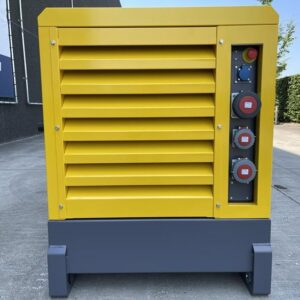
Another advantage is simplicity. Portable compressors come ready to use out of the box. Plug it in, connect the hose, and you are running. There is no need to install piping, mount a large tank, or wire a dedicated electrical circuit. For small operations or one-person crews, this convenience is hard to beat.
When Portability Makes Sense
- You work on multiple sites or move between different areas of a large facility.
- Your air demand is intermittent and you rarely run more than one tool at once.
- You have limited space and need to store the compressor when not in use.
- You prefer a lower upfront investment and simpler maintenance.
That said, portable compressors have limits. Running a high-consumption tool like a sandblaster or a large impact wrench can drain the tank quickly, causing the motor to cycle on and off frequently. This can lead to pressure drop at the tool and reduced performance. If your work involves sustained high air demand, a portable unit may struggle to keep up.
Stationary Compressors: Continuous Power for Heavy Demand
Stationary compressors are built for fixed installations where compressed air is needed for long periods or at high volume. These systems consist of a compressor pump, a motor, and a large receiver tank, all mounted on a frame that is bolted to the floor or set on vibration pads. The compressed air is distributed through a network of pipes to multiple drop points around the shop or worksite.
The main strength of a stationary setup is its ability to deliver a steady airflow rate at consistent operating pressure. Because the tank is large and the pump is designed for continuous duty, the system can handle multiple tools running at the same time without significant pressure drop. This makes it ideal for auto repair shops, woodworking facilities, production lines, and any environment where several people use pneumatic tools simultaneously.
Stationary compressors also tend to have longer service lives. They run at lower RPMs and are built with heavier components. With proper maintenance, a quality stationary unit can last for decades. The trade-off is the installation effort. You need a dedicated space, a concrete floor that can handle the weight, and often a three-phase electrical supply. Running the air lines involves planning and piping work, but once installed, the system runs with minimal day-to-day attention.
When a Stationary Setup Is the Better Fit
- Your shop or facility has a fixed layout and you need air at multiple workstations.
- You run high-consumption pneumatic tools continuously, such as die grinders, sanders, or paint sprayers.
- You want to avoid frequent motor cycling and the noise of a portable unit running beside you.
- You have the space and budget for a larger installation and expect to use it for many years.
One factor that is often overlooked is the effect of receiver tank size on performance. A larger tank provides a buffer that smooths out demand spikes. In a stationary system, the tank can be sized to match the peak air usage, reducing the number of pump starts. This not only saves energy but also extends the life of the motor and pump. For operations where compressed air is critical to production, the investment in a properly sized stationary system pays off.
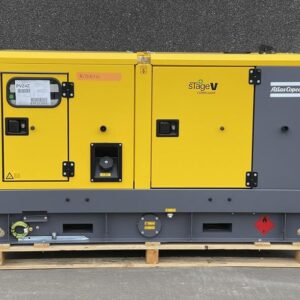
Comparing Key Factors: Mobility vs. Output
The choice between portable and stationary compressors ultimately comes down to how you weigh mobility against output. If you need compressed air in different places each day, a portable unit is the only practical option. If you work in a single location and require a steady supply of air at high volume, a stationary system will serve you better.
Another consideration is noise. Portable compressors, especially the smaller oil-less types, can be loud. Stationary compressors can also be noisy, but because they are often installed in a separate room or a dedicated compressor shed, the noise can be isolated from the work area. Some shops build an enclosure around the compressor to further reduce sound levels. This is harder to do with a portable unit that you move around.
Operating pressure is another point of difference. Most pneumatic tools are designed to run at a specific pressure range, typically 90 to 100 PSI. Both portable and stationary compressors can deliver that pressure, but the stationary system maintains it more steadily under heavy load. If you have ever experienced a tool slowing down as the tank pressure drops, you know how important it is to have a compressor that matches your air demand.
For operations that rely heavily on pneumatic tools, the reliability of the air supply directly affects productivity. A portable compressor that runs continuously to keep up with a high-demand tool can overheat and trip its thermal protection. A stationary compressor with a proper duty cycle rating will run all day without issue. This is why shops that depend on compressed air for their core processes almost always choose a stationary system.
Hybrid Solutions and Practical Tips
Some operations find that a combination of both types works best. A stationary compressor can supply the main shop, while a small portable unit handles remote tasks or backup. This approach gives you the best of both worlds, though it requires a larger overall investment. Another option is to use a portable compressor with a larger tank and a higher CFM rating if you need more output but still want mobility.
When evaluating any compressor, look at the airflow rate at the pressure you actually use. Many manufacturers rate their compressors at a lower pressure than what your tools require. Make sure the unit can deliver enough CFM at your operating pressure to run your most demanding tool, plus a margin for future needs. Also consider the duty cycle: if the compressor is rated for 50% duty, it can run only half the time. For continuous use, aim for 100% duty or a stationary system designed for it.
Finally, think about the air distribution. Even with a powerful stationary compressor, poor piping can cause pressure drop. Use pipes that are large enough for the run length and the number of drop points. Drain legs and moisture traps are essential to keep the air clean and dry. These details matter more with stationary systems, but even portable compressors benefit from a short, large-diameter hose.
Choosing between portable and stationary compressors is not about which is better in general. It is about matching the equipment to your specific pattern of work. Understand your air demand, your workspace layout, and how often you move. That knowledge will guide you to the right setup. A portable unit gives you freedom and simplicity. A stationary system gives you power and endurance. Both are valuable tools when chosen for the right job.